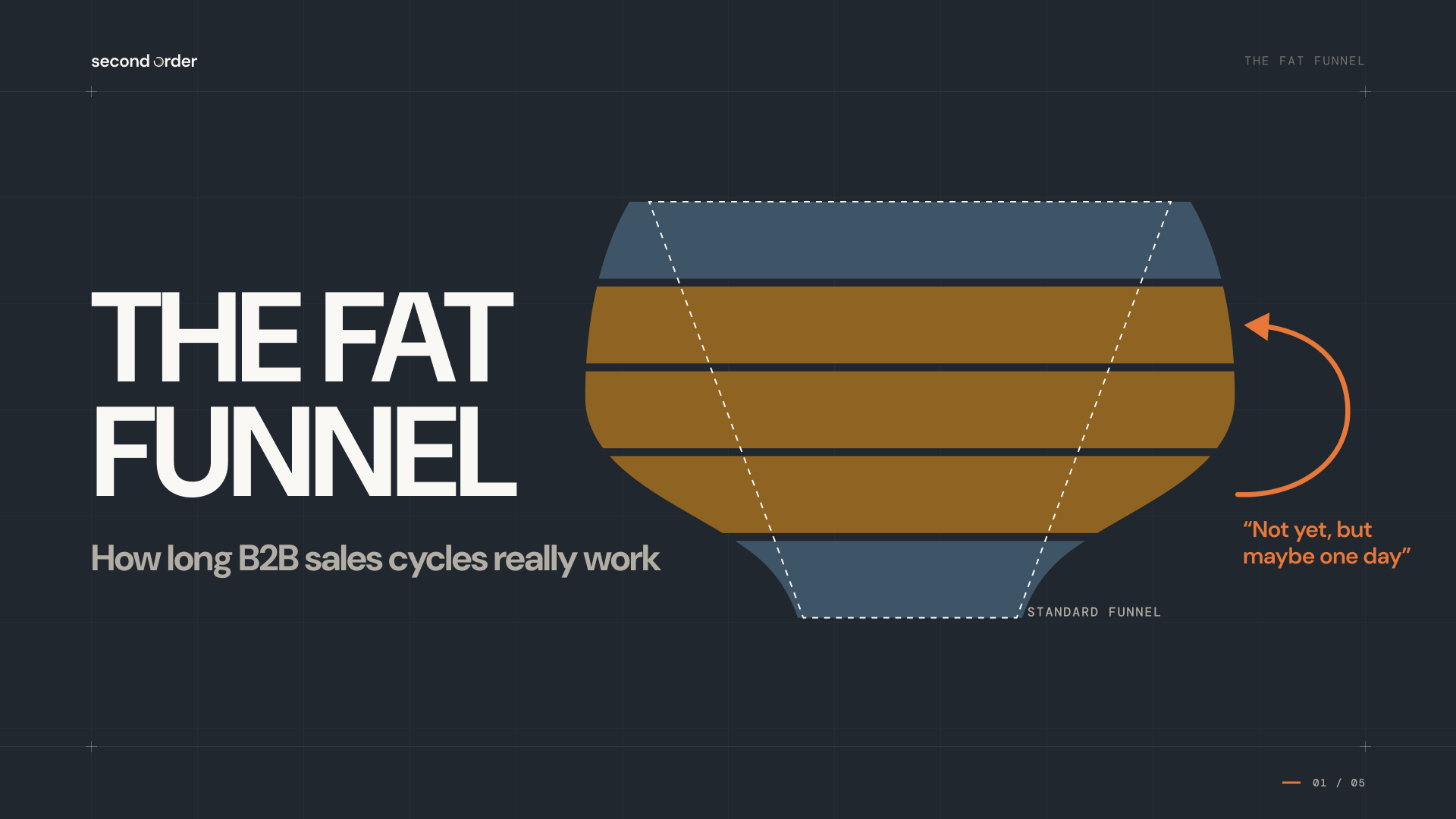
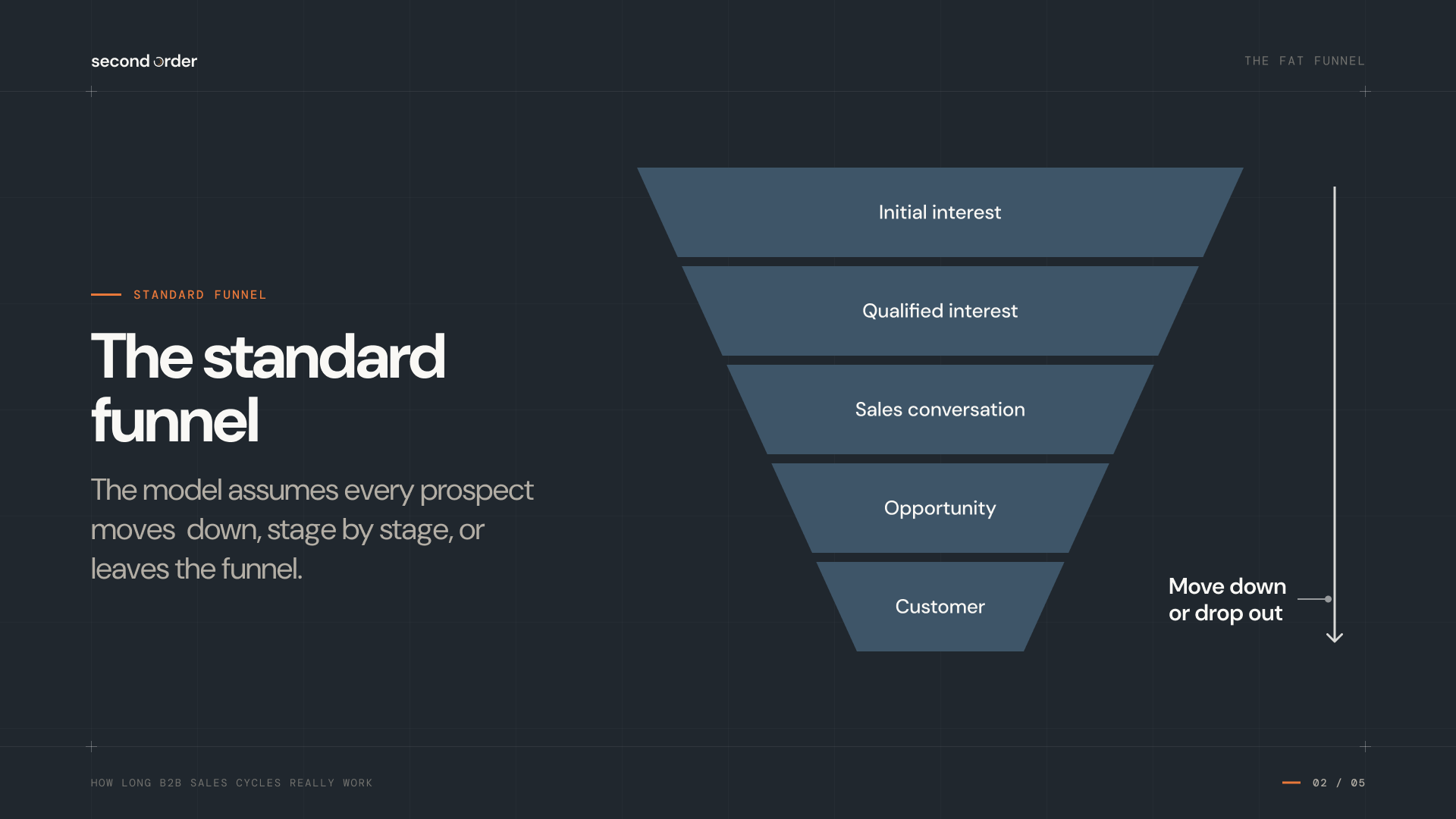
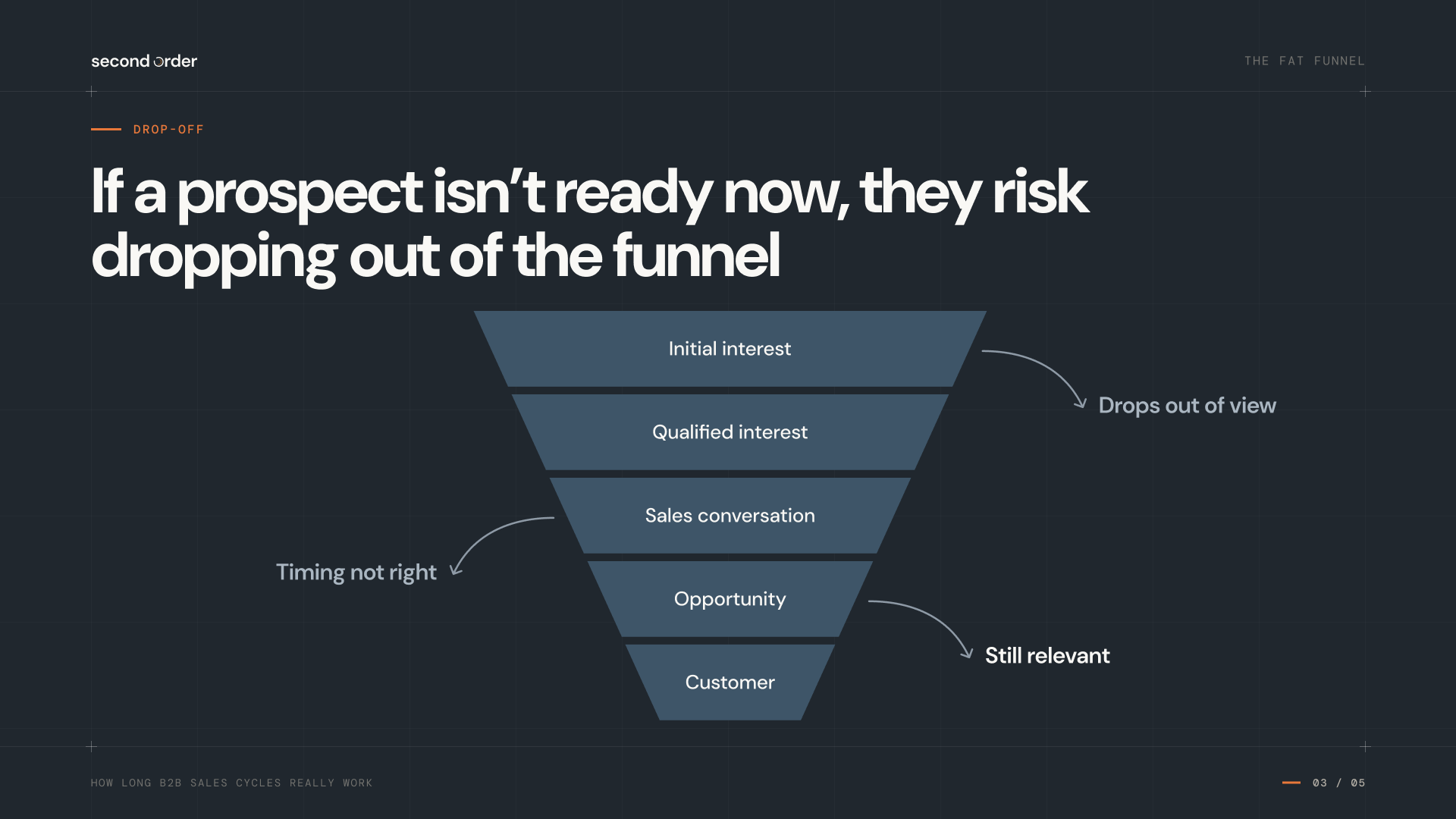
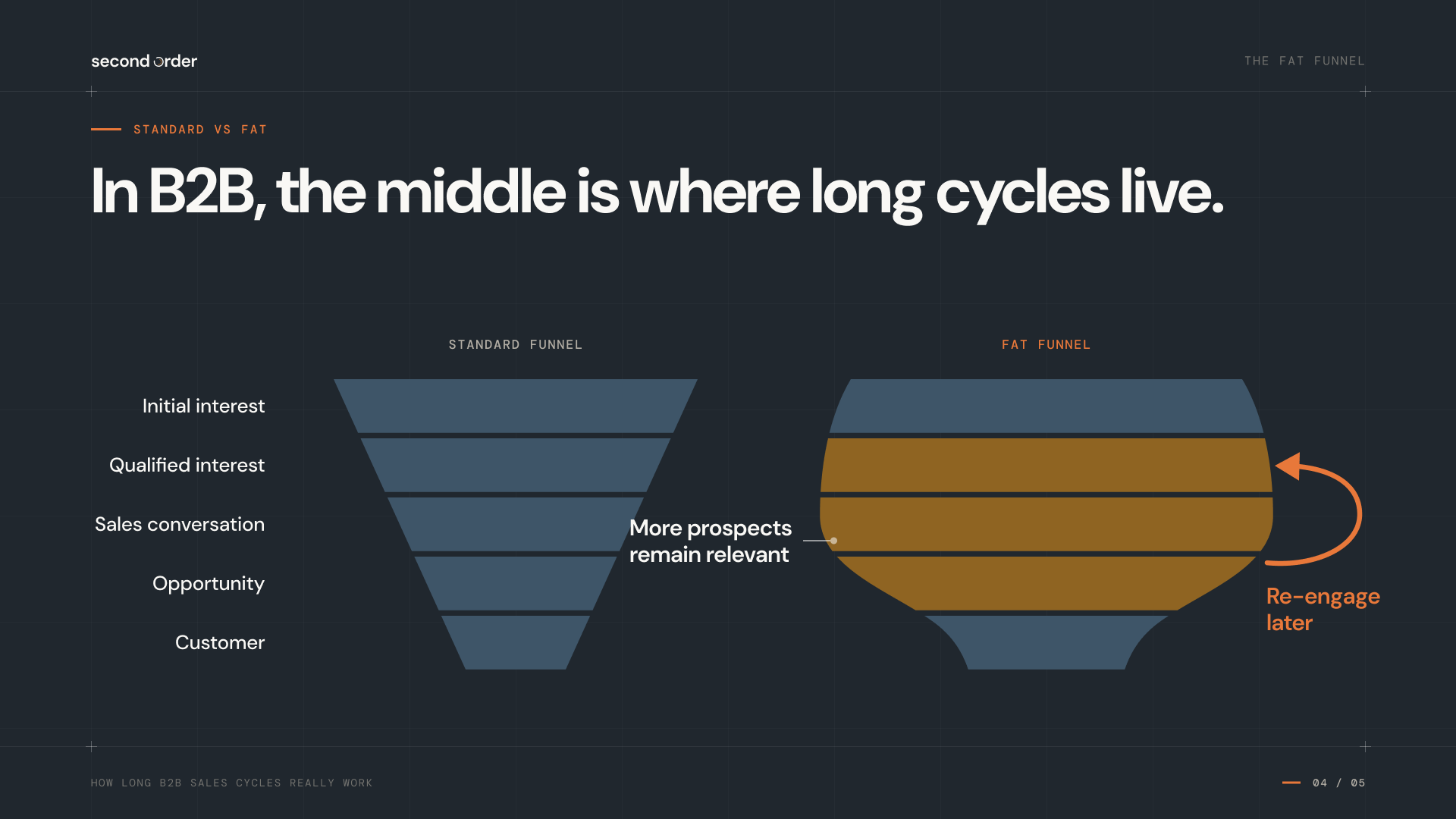
The traditional marketing funnel starts broad and gets narrow. At each stage, some prospects progress and the rest drop away. That is a useful simplification, but it becomes awkward in long-cycle B2B, where there is a big difference between a prospect who is not a fit and one who is simply not ready now.
A better model lets the middle get fat. Relevant prospects can pause, stay visible and return to an active sales conversation when timing changes.
Keep the context when the deal stops
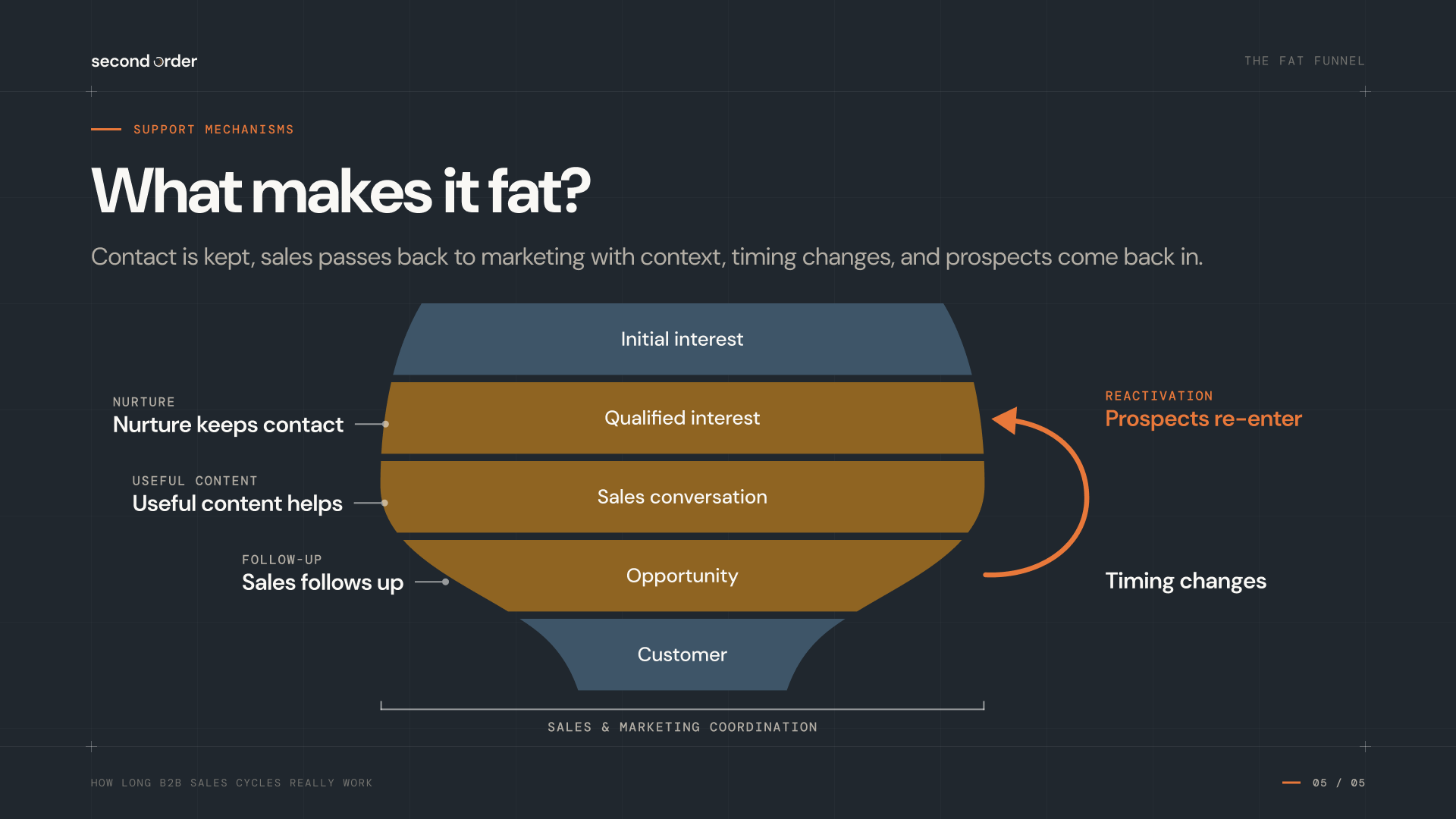
When a relevant prospect stops moving, the first job is to preserve what you already know. That might include where they first came from, who they have spoken to, what content or events they engaged with, the products or problems they care about, and anything known about timing, budget or decision-making.
That context should survive the handover. Sales should be able to stop actively pursuing somebody and return them to nurture without sending them back to square one. When the prospect becomes active again, the history should still be there.
Stay useful without forcing the timing
Depending on the context, that might mean occasional emails, useful content, event invitations or a deliberate sales follow-up later. The point isn’t to keep contacting somebody for the sake of it. It’s to remain useful and make it easier to recognise when something changes.
You can also add to the picture over time. If someone from the account attends another trade show, downloads something, responds to an email or speaks to sales, that new information can be added to what you already know rather than treated as a fresh lead.
Marketing compounds when the business can remember the people it has already earned attention from. In B2B markets with a finite pool of relevant accounts, that matters. You stop treating every quarter as a fresh search for strangers and get better at managing the relationships and context you already have.
How to make a Fat Funnel work in practice
You don’t need specialist software to do this. Most CRM and automation platforms can support it. The harder part is agreeing what your customer journey actually looks like and making the system reflect that reality.
That usually means sensible lifecycle stages, clear rules for when sales is actively pursuing somebody and when they return to nurture, useful fields for timing, reasons and context, and simple triggers that bring people back into view.
The CRM should support the process rather than dictate it. Having the right fields to capture useful reasons, timing and context is also important, as is useful segmentation.
For example, if you exhibit across several industries (eg water, food, packaging and so on), recording a prospect’s sector and location means you can later identify relevant people when an event comes up. If you’re exhibiting at a water event in Brisbane, you can contact local prospects already known to be interested in water rather and let them know you’ll be there.
The system only works if people will use it. Capture enough context to be useful, but not so much that the CRM becomes a bureaucratic exercise. The aim is to make the next interaction better, not to create more admin.
How Fat is your Funnel?
If you’re not sure what condition your funnel is in, here’s a few important questions to ask
- How many relevant prospects from last year could you identify today?
- What happens when sales stops actively pursuing somebody?
- Can you distinguish between a genuine “no” and a “not now”?
- How much useful context survives when somebody moves back into nurture?
- What actually brings those prospects back into view?
The Compounding benefits of a Fat Funnel
A Fat Funnel doesn’t remove the need for lead generation. It means you get more value from the attention you have already earned.
Without it, prospects who aren’t ready now tend to disappear, and the business keeps paying to rediscover or reacquire people it already knew. With it, relevant prospects and their context accumulate over time.
That also improves your view of the customer journey. You can start to see which marketing and sales interactions tend to coincide with progress over months or years, rather than judging everything by the last measurable touch.
New lead generation becomes more valuable too. You’re not just filling the top of a funnel that steadily forgets people; you’re adding relevant prospects to a system that can remember them, learn from them and bring them back into view when timing changes.
That is where the compounding effect comes from.
Start fattening your own funnel
The B2B Marketing & Revenue Review workbook is a self-guided way to connect your marketing to your customer journey, a vital step in creating a fat funnel.
.png)